
🤖 FiniPot AI Insights
The rapid growth of Flipkart Minutes highlights a significant shift in consumer expectations within the Indian e-commerce landscape, driven by the increasing demand for speed and convenience in grocery and daily goods delivery. This aggressive expansion, marked by a substantial increase in micro-fulfillment centers and customer retention, indicates a strategic push by Flipkart to capture a larger share of the quick-commerce market. The company’s ability to leverage its existing customer base is a key differentiator. However, the intense competition from established players like Swiggy’s Instamart and Blinkit, as well as Amazon’s renewed focus on instant delivery with Amazon Now, presents significant challenges. Profitability and sustainable growth in this capital-intensive segment remain critical factors for long-term success. The changing consumer preference towards quick commerce suggests it is becoming a fundamental part of the online retail experience, making it imperative for major e-commerce players to invest and adapt.
Quick Summary
- Flipkart Minutes has seen explosive growth, nearing 1.2 million daily orders, up from 400,000 in November.
- This surge positions Flipkart’s quick commerce arm as a significant challenger to established players like Swiggy’s Instamart.
- The company is rapidly expanding its micro-fulfillment center network to support this rapid expansion.
- Global rival Amazon is also intensifying its push into India’s instant delivery market with Amazon Now.
Indian consumers have embraced the convenience of rapid deliveries, a trend pioneered by local startups. Now, Walmart-owned Flipkart is making a dramatic entrance into this quick-commerce arena.
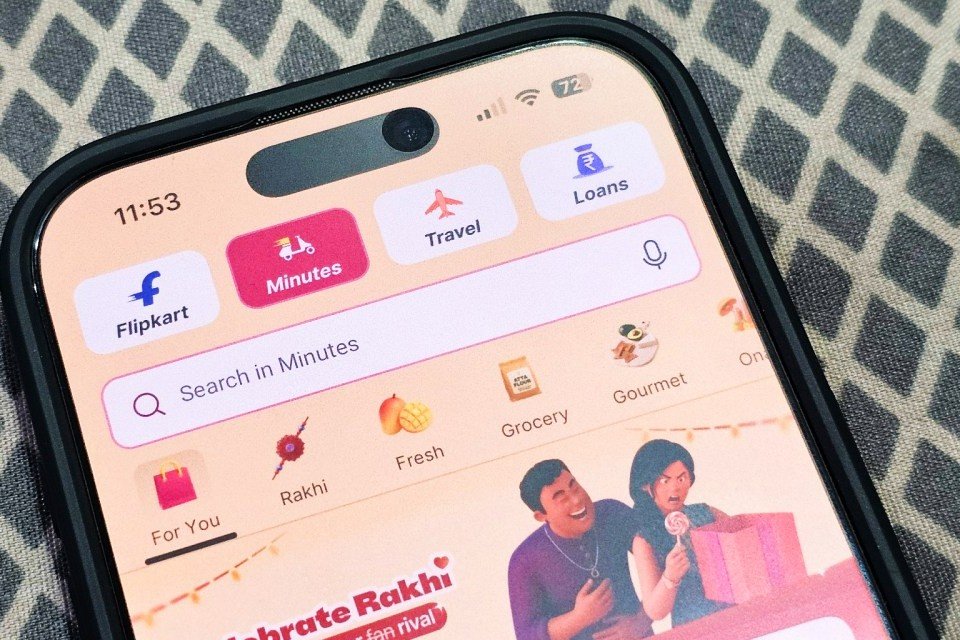
Flipkart Minutes, launched in August 2024, is already handling an impressive 1.1 million to 1.2 million orders daily. This marks a significant jump from its initial 390,000 to 400,000 orders per day in November. This rapid ascent puts the service neck-and-neck with Swiggy’s Instamart, a leading player in the market.
The speed of Flipkart’s growth is notable, given it is a latecomer. Instamart, Blinkit, and Zepto have long dominated India’s quick commerce landscape. Instamart and Zepto launched during the pandemic in 2020 and 2021 respectively, while Blinkit traces its origins back to 2013.
While Blinkit leads with an estimated 3.4 million to 3.6 million daily orders, followed by Zepto at 2.4 million to 2.6 million, Flipkart is closing the gap with Instamart. Instamart continues to boast substantial scale, operating over 1,200 dark stores across more than 130 cities and serving over 14 million monthly transacting users.
Flipkart’s aggressive expansion of its delivery infrastructure is fueling its growth. The company now operates approximately 1,020 to 1,050 micro-fulfillment centers, up from 600 in January and 340 a year ago. They aim to reach 1,500 such facilities by the end of 2026.
A key advantage for Flipkart is its vast existing customer base. Years of investment in building its e-commerce presence provide a ready audience for its fast-delivery service, according to market analysts.
Customers are returning to Flipkart Minutes, with 65% to 70% being repeat buyers. Transactions per customer have also surged by 50% to 60% compared to a year ago.
Average order values range from 400 to 500. Popular categories include fruits, vegetables, staples, dairy, and meat. Flipkart is also expanding its offerings to include higher-end gourmet and organic products.
Even with its rapid expansion, Flipkart Minutes has managed to reduce its average delivery time to about 11 minutes, down from 13 minutes a year ago.
This surge in quick commerce occurs even as broader consumer demand shows signs of softening. Despite slower overall consumption growth, the shift towards quick and e-commerce continues, with platforms seeing healthy growth in monthly active users.
Global rival Amazon is also making a strong push into India’s quick-commerce market. Amazon Now, its instant delivery service, has seen its orders double every quarter since launch. The company plans to expand Now to over 300 cities and establish a network of over 1,000 micro-fulfillment centers.
The rapid expansion in quick commerce is seen as a defensive move for both Flipkart and Amazon. As consumers grow accustomed to instant deliveries, these e-commerce giants risk losing business if they cannot match the speed of specialist platforms.
Is Quick Commerce Here to Stay?
Consumer behavior is demonstrably shifting towards instant gratification for essential goods. Analysts suggest that once consumers experience the convenience of near-instant delivery for groceries and everyday items, returning to traditional scheduled deliveries will be difficult. This indicates a fundamental, long-term change in shopping habits.
Leave a Reply