
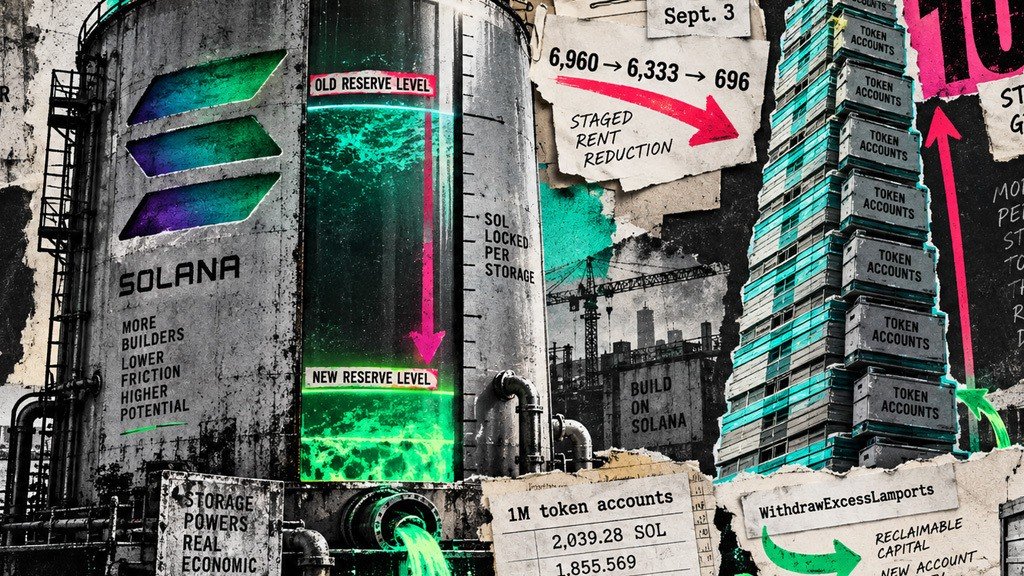
Solana initiated its first rent reduction on September 3, cutting the minimum SOL required to create network accounts by roughly 9%. This change allows eligible account owners to reclaim excess SOL previously held, and also lowers the initial capital needed for businesses setting up new accounts.
Solana’s “rent” is a balance of SOL held against account storage, recoverable when an account is closed rather than an ongoing fee. The network’s long-term plan aims for a 90% total reduction in required SOL reserves. If fully implemented, this would allow the network’s persistent account state to grow tenfold before requiring the same minimum SOL as before the cuts.
The first reduction, which went live at epoch 1028, lowered the reserve parameter from 6,960 to 6,333 lamports per byte. For an illustration of one million standard token accounts, this initial step reduces the required reserve from 2,039.28 SOL to 1,855.569 SOL, a saving of 183.711 SOL. The final target of the five-stage plan is 696 lamports per byte.
A key aspect of this change is who controls the reclaimed capital. While a payments provider might have initially funded a customer’s token account, the account owner holds the authority to withdraw any excess SOL. This means the party that supplied the SOL may not be the one entitled to reclaim it, making account ownership economically important. The WithdrawExcessLamports instruction allows SOL above the current minimum to be moved without closing the account.
Further rent reductions depend on reviews of state growth, with the final three steps anticipated with Agave 4.4 in November. While the reduction eases upfront capital for new accounts, its impact on total circulating SOL is minor; the illustrative 1.835 SOL reduction for a million accounts represents a tiny fraction of the 585.36 million circulating SOL. Network activity also generates SOL demand through transaction fees, with half the base fee burned and the rest going to validators. SOL holders can also stake their tokens to help secure the network.
Leave a Reply