Key Takeaways
- AI model selection directly impacts startup costs, gross margins, and competitive differentiation, influencing investor capital.
- Nvidia advocates a hybrid “proprietary and open” approach, rejecting a simple either/or for future AI development.
- TechCrunch Disrupt 2026 will host Nvidia’s Nader Khalil and Sydney Sykes to dissect this crucial business decision for global investors and tech leaders.
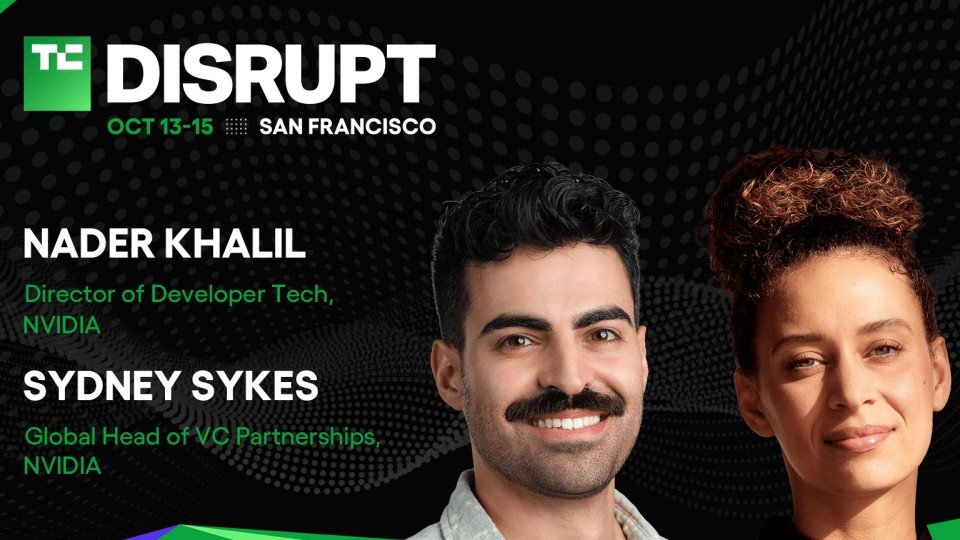
The strategic dilemma facing AI product builderswhether to leverage open-source models, opt for proprietary frontier AI, or pursue a hybrid approachis set to take center stage at TechCrunch Disrupt 2026. The conference, running October 13-15 in San Francisco, will feature a session titled The Open vs. Closed AI Debate Is Just Getting Started on the Builders Stage. Led by Nvidia’s Nader Khalil, Director of Developer Tech, and Sydney Sykes, Global Head of VC Partnerships, the discussion aims to unpack the complex financial and operational trade-offs influencing capital deployment and long-term business viability across the AI ecosystem.
Open vs. Closed AI Models: What Drives the Debate?
The decision on an AI model strategy touches every core business function, from infrastructure spend and development speed to potential for competitive advantage and investor appeal. For founders, the choice dictates cost structures, future margins, and their ability to differentiate in a rapidly evolving market. Proprietary frontier models, while offering advanced capabilities, often come with vendor lock-in risks and potentially higher ongoing licensing costs. Conversely, open models, despite offering greater control and flexibility, shift the burden of deployment, optimization, and infrastructure maintenance back to the builder, impacting operational expenditures and internal resource allocation.
Nvidia itself, a dominant player in AI infrastructure, highlights the rapid advancements in open models. In July, its Nemotron open models and datasets were cited in 145 papers accepted at ICML 2026, showcasing their utility across robotics, autonomous vehicles, and biomedical research. This rapid maturation of open-source alternatives forces a re-evaluation of where genuine commercial sense lies for each approach.
Nvidia’s Hybrid Vision: Beyond Either/Or
Nvidia CEO Jensen Huang previously articulated a nuanced perspective at GTC earlier this year, suggesting the future isn’t proprietary versus open, but rather “proprietary and open.” This hybrid view acknowledges that successful AI development may increasingly involve combining strengths from both camps. For example, Nvidia’s Nemotron 3 Super, an open 120-billion-parameter model launched in March for agentic workloads, is already being integrated with proprietary models by companies. This strategy seeks to leverage the flexibility and transparency of open source while potentially integrating specialized, performance-optimized proprietary components for specific tasks.
Nader Khalil, bringing his experience as co-founder of Brev.dev (acquired by Nvidia in July 2024 for its AI infrastructure tools simplifying GPU access), will address the builder’s perspective. Sydney Sykes, representing Nvidia’s venture ecosystem efforts, will offer insights into what makes AI companies investable and scalable from a capital markets standpoint. This dual perspective is crucial for understanding how technical decisions directly intersect with fundraising and market valuation.
The Moat Question: Where Does AI Advantage Reside?
A core challenge facing investors and founders alike is identifying where sustainable competitive advantage, or a “moat,” truly resides in the AI stack. If competitors can access the same foundational proprietary API, differentiation must stem from other areas: unique proprietary data, specialized workflows, robust distribution channels, established customer relationships, or superior product experience. However, adopting an open model does not automatically create a moat either; it often necessitates greater investment in proprietary data sets, fine-tuning, or specific application layers to build defensibility.
The economics are also fluid. The choice between open and closed significantly impacts a company’s cost of goods sold (COGS) and, consequently, its gross margins. A higher COGS due to expensive proprietary model usage or extensive self-managed infrastructure for open models can erode profitability, affecting shareholder returns. This dynamic shifts continuously as model capabilities and pricing structures evolve every few months, making long-term strategic lock-ins increasingly risky.
Analyst Perspective & Market Impact
The financial implications of an AI model strategy are profound for both listed tech giants and nascent startups. For institutional investors, understanding a company’s underlying AI architecture is becoming critical for due diligence, directly influencing valuation multiples and assessing future growth potential. Companies heavily reliant on external proprietary models may face increased operating expenses and reduced gross margins, impacting earnings per share. Conversely, those leveraging open models might incur substantial capital expenditures for GPU infrastructure, but gain greater control over intellectual property and potentially lower long-term variable costs. The SEC and Bank of England are increasingly scrutinizing AI’s role in financial services, adding a regulatory layer to these strategic decisions, especially concerning data privacy and algorithmic bias, which can be influenced by model choice.
| Aspect | Open AI Models | Proprietary AI Models |
|---|---|---|
| Initial Cost | Lower direct licensing fees; higher self-hosting/tuning infrastructure investment. | Potentially higher API/license fees; less internal infrastructure setup. |
| Control & Customization | High control over data, deployment, fine-tuning, and model architecture. | Limited control; reliance on vendor for updates, features, and security. |
| Differentiation Potential | Achieved through unique data, workflow, application layer, or product experience. | Model itself can be a differentiator if truly frontier; risk of commoditization if API is generic. |
| Vendor Lock-in | Minimal; greater portability across infrastructure providers. | Significant risk of dependence on a single provider for core functionality. |
| Deployment & Maintenance | Requires internal expertise for infrastructure, security, and updates. | Managed by the vendor; reduced internal operational overhead for model hosting. |
How will today’s AI model choices directly impact a company’s valuation multiples and long-term defensibility in the capital markets five years from now? The answer could define the next generation of tech leaders and laggards.
Leave a Reply