
Key Takeaways
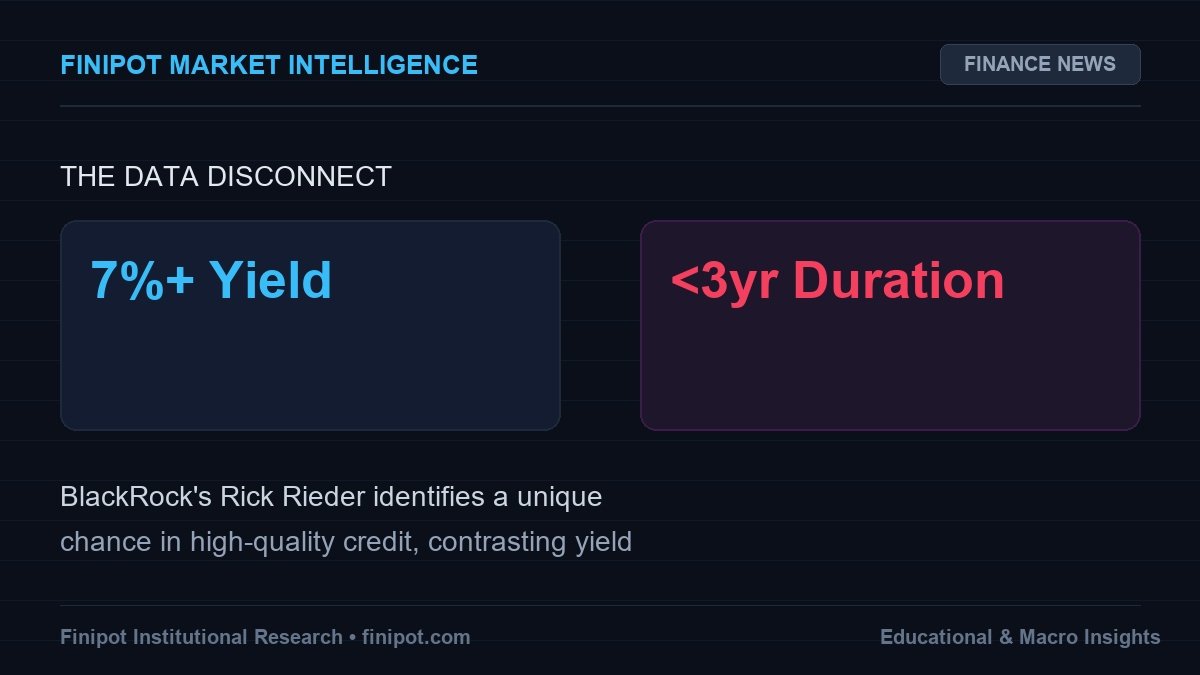
- BlackRock’s Rick Rieder identifies a rare ‘historic’ opportunity in investment-grade bonds, touting potential 7%+ yields with less than three years of duration and A- credit quality.
- Hyperscaler corporate bonds, from entities like Alphabet and Amazon, are highlighted as key opportunities due to low leverage and strong cash flow, despite significant issuance volumes totaling $228.4 billion year-to-date.
- Rieder cautions on the Federal Reserve’s rate hike trajectory, noting its impact on housing and floating-rate finance, while monitoring risks from rising government debt and potential ‘crowding-out’ effects from AI-related bond supply.
Rick Rieder, BlackRock’s Chief Investment Officer for Global Fixed Income, sees an unprecedented opening in high-quality credit, marking the first time in an extended period he has expressed such optimism. In an exclusive interview, Rieder detailed his fourth-quarter fixed-income outlook, suggesting investors can construct diversified portfolios yielding more than 7% with less than three years of duration and an average credit quality of A-.
These yield levels, Rieder notes, are typically observed during periods of significant economic distress or default risk. However, the current environment presents a robust economy, minimizing concerns about widespread defaults. This unique confluence creates what Rieder terms a ‘historic’ chance for bond investors.
Rick Rieder’s Outlook: High-Quality Credit Amidst Market Shifts
Rieders positive stance on investment-grade corporate bonds stands out. He emphasizes that this is a segment he has not favored ‘in a really long time,’ particularly highlighting ‘hyperscaler’ bonds. Major tech firms like Alphabet, Amazon, Meta Platforms, and Oracle have issued approximately $228.4 billion in bonds year-to-date as of October 20, according to LSEG, largely to fund AI infrastructure development. Rieder praises these companies for their low leverage and substantial cash flow, offering attractive yields for high-quality debt.
His own iShares Flexible Income Active ETF (BINC) has increased its allocation to investment-grade corporates to 14.3% from 8.5% in July, reflecting this conviction. Despite the attractive yields, Rieder advises patience, acknowledging that rates could still move higher. He stresses that the starting yield is the primary determinant of future returns over a holding period of a year or longer.
BlackRock’s CIO on Fed Policy and Broader Risks
Rieder also keeps a close watch on the Federal Reserve, which the market anticipates will raise its federal funds rate again in December. The CME Group FedWatch tool shows a nearly 90% probability of a hike. While Rieder expects this action, he disagrees with its necessity, arguing that higher rates are harming segments like housing and floating-rate finance without significantly impacting tech companies’ capital expenditures, a major growth driver.
He points to several broader risks. The rising global government debt levels, particularly in the United States, where the budget deficit hit $2 trillion for fiscal 2026, are a concern. The escalating cost of servicing this debt as central banks raise rates presents a long-term challenge. Furthermore, the sheer volume of bond supply from AI-focused data centers and hyperscalers could lead to a ‘crowding-out effect,’ especially as government rates continue to rise.
Analyst Perspective & Market Impact
Rieder’s call on investment-grade bonds offers a compelling narrative for fixed-income investors seeking income without taking excessive credit risk. The proposed combination of a 7%+ yield and sub-three-year duration, if achievable, significantly outperforms traditional low-duration strategies. However, the market’s pricing of a near 90% chance of a December Fed hike suggests persistent rate volatility. The ‘crowding-out’ risk from AI-related bond supply, combined with ballooning government deficits, poses structural challenges that could pressure even high-quality spreads. Investors must discern whether the current yield premium compensates for potential future rate increases or unexpected liquidity shifts.
Comparing Rieder’s Vision to Current Offerings
While Rieder did not name specific credits for his hypothetical portfolio, existing ETFs offer a glimpse into the investment-grade landscape. Below is a comparison:
| Portfolio/ETF | 30-Day SEC Yield | Effective Duration | Credit Profile |
|---|---|---|---|
| Rieder’s Hypothetical | 7%+ | <3 years | Average A- |
| iShares Aaa – A Rated Corporate Bond ETF (QLTA) | 5.68% | 6.48 years | Aaa – A Rated Corporates |
| iShares Flexible Income Active ETF (BINC) (managed by Rieder) | 5.66% | 3 years | Extends beyond IG credit |
Rieders hypothetical portfolio offers a significantly higher yield for a shorter duration than the QLTA ETF, which focuses purely on highly-rated corporates. While BINC aligns closer on duration, its yield is lower and its portfolio extends beyond strict investment-grade criteria, suggesting a different risk-reward profile.
Rieder’s Investment Philosophy: High-Quality Focus
Rieders strategy emphasizes selectivity, particularly outside of investment-grade credit. He warns against indiscriminately chasing yields in areas like certain AI infrastructure projects that are not ‘hyperscaler guaranteed or hyperscaler backed.’ This cautious stance reflects a commitment to quality and a detailed understanding of underlying credit fundamentals, distinguishing strong balance sheets from speculative ventures. Junk-rated CoreWeave, which saw its stock drop and bond yields jump, serves as a recent example of the volatility in high-yield segments tied to AI funding.
The Big Question: Can investors truly achieve Rieder’s proposed 7%+ yield with low duration and A- credit quality without exposing themselves to unforeseen liquidity squeezes or credit downgrades if economic conditions deteriorate faster than anticipated?
Leave a Reply