
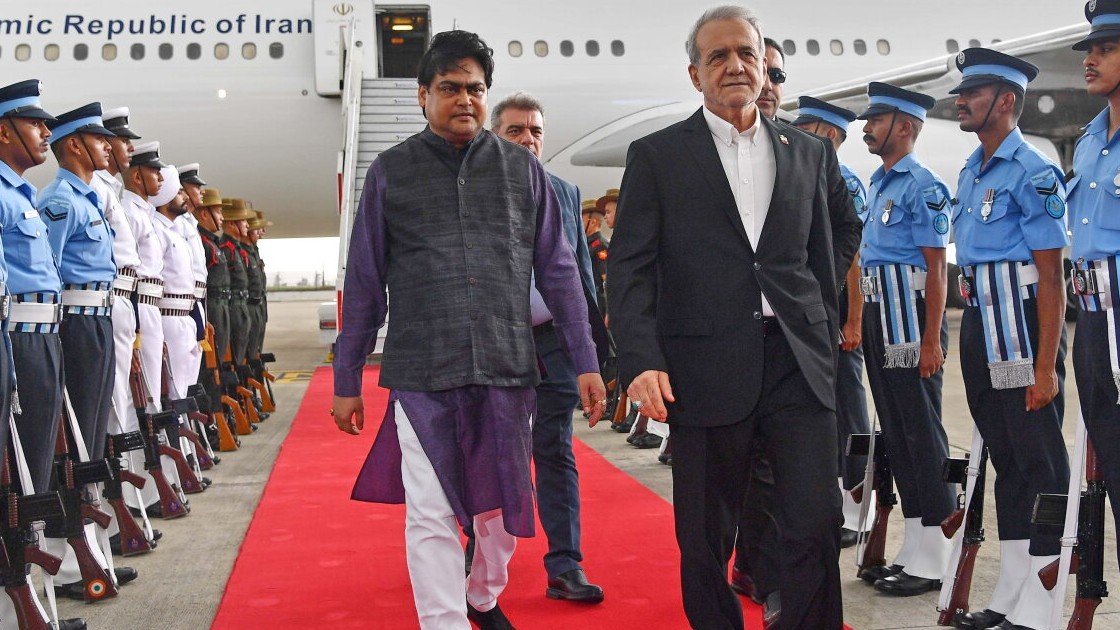
Leaders from the BRICS bloc convened in New Delhi, India, on September 11-12, 2026, for a summit centered on expanding trade, investment, and addressing global conflicts. The eleven-member group, now representing about half the world’s population and a significant share of global economic output, aims for a larger role in global economic and political discussions, with a key priority being the reduction of reliance on the U.S. dollar.
Leaders Converge in New Delhi Amid Global Tensions
Indian Prime Minister Narendra Modi hosted Russian President Vladimir Putin, Chinese President Xi Jinping, and Iranian President Masoud Pezeshkian, alongside counterparts from the other eight BRICS nations. The summit takes place against a backdrop of ongoing wars in Ukraine and the Middle East, plus escalating U.S.-China tensions. These events test the bloc’s capacity to unify countries with diverse geopolitical interests.
A primary focus for the BRICS leaders is to promote greater use of national currencies in trade and payments, alongside developing alternatives to Western-dominated financial institutions. Both Russia and China view BRICS as a vehicle to lessen Western, particularly U.S., economic dominance. Iranian President Masoud Pezeshkian specifically advocated for expanding national currency trade among members, aiming to shield the bloc from external economic pressure and sanctions.
India’s Strategic Balancing Act
For India, the summit highlights its intricate foreign policy. New Delhi seeks to maintain longstanding ties with Moscow and Tehran, while simultaneously deepening relationships with the U.S. and Europe in economic, defense, and technology sectors. Prime Minister Modi held separate talks with President Putin and President Pezeshkian ahead of the main summit. India also hopes the forum can help ease its strained relations with China; talks between Modi and Xi are anticipated to consolidate a diplomatic thaw.
The bloc faces challenges in presenting a united front. Divisions were evident in May 2026, when BRICS foreign ministers failed to agree on a joint statement regarding the Iran war, leading India to issue a chair’s summary instead. As fears grow that the Iran conflict, triggered by U.S.-Israeli strikes on February 28, 2026, could expand, the BRICS unity is under scrutiny amidst differing member positions on the conflict and their relations with the United States.
Leave a Reply