
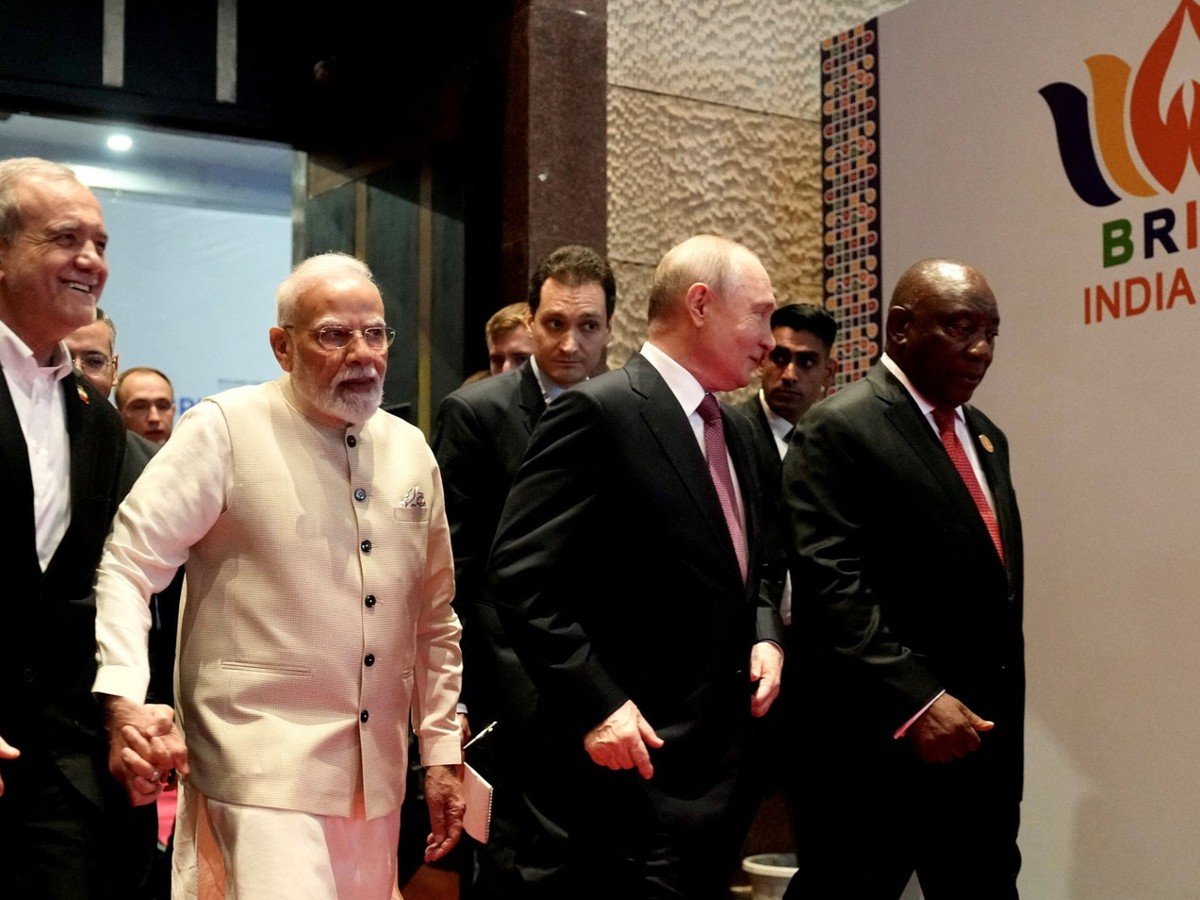
NEW DELHI As BRICS leaders convened in New Delhi today, September 12, 2026, the ongoing tension between the United States’ aggressive tariff policies and the bloc’s drive for economic autonomy took center stage. Despite President Donald Trump’s stated hostility towards BRICS, his administration’s use of tariffs and financial leverage appears to be inadvertently strengthening the very incentives for member nations to reduce their reliance on the US dollar and Western financial systems.
Why BRICS Nations Are Building Beyond the Dollar
The US government, under the Trump administration, has consistently wielded tariffs against trading partners, including BRICS members like Brazil, India, and China. Last year, President Trump threatened an additional 10 percent tariff on any country aligning with what he termed the blocs anti-American policies. This strategy, while intended to curb rival economic blocs, has instead prompted countries to seek options that reduce their vulnerability to US financial power.
For nations outside the traditional Western economic core, dependence on US-centered financial infrastructure presents distinct risks. The dollar’s central role allows the US to control international transactions and impose sanctions, restricting access to markets and financial systems. This structural leverage, increasingly employed as a political tool, offers a strong impetus for BRICS members to build parallel pathways.
While the dollar’s dominance as a global reserve currency remains undisputedaccounting for 57.1 percent of global foreign-exchange reserves in the first quarter of 2026, according to the International Monetary FundBRICS efforts are not aimed at direct replacement. The Chinese renminbi, for comparison, held only 2 percent during the same period, with the dollar’s share even seeing a slight increase.
BRICS’ Concrete Steps Towards Financial Autonomy
The 11 BRICS members Brazil, China, Egypt, Ethiopia, India, Indonesia, Iran, Russia, Saudi Arabia, South Africa, and the United Arab Emirates despite significant political and economic differences, are actively experimenting with ways to diminish dollar dependence. South Africa has integrated with Chinas Cross-Border Interbank Payment System, enabling direct renminbi settlements for transactions with China. Brazil and China are increasingly trading in their national currencies, while India and the UAE have settled transactions in rupees and dirhams. China and Russia have also shifted a large portion of their bilateral trade into local currencies.
The bloc is also advancing collective financial connectivity. Last year, BRICS leaders called for further work on a cross-border payments initiative and greater interoperability among member payment systems. In August, Reserve Bank of India Governor Sanjay Malhotra confirmed discussions among BRICS countries to link their fast-payment networks and potentially integrate their central bank digital currencies. India is also pushing for wider adoption of the rupee in international trade.
The New Development Bank (NDB), founded by the original BRICS members, provides another avenue for reducing dollar exposure. The NDB has made lending in members local currencies a key strategic goal. Its current strategy aims for 30 percent of its financing to be in local currencies, primarily to shield borrowers from foreign-exchange risks and costly currency swaps. This target could rise to 40-50 percent for the upcoming 2027-2031 cycle.
These initiatives, though largely experimental, bilateral, or limited in scale, signify a gradual construction of alternatives. This allows governments and businesses to conduct a growing number of transactions without relying on the dollar or Western-dominated financial infrastructure. Recent US actions, such as a 25 percent tariff on a range of Brazilian products in July and scrutiny of Brazils Pix payment system, or sanctions against Russia and Iran, only amplify the urgency for these alternative systems.
Most BRICS countries aim to diversify their options rather than switch allegiance from one dominant power to another. Their objective is to enhance their ability to maneuver between competing centers of power, thereby reducing the costs associated with resisting Washingtons economic directives.
Leave a Reply