
Key Takeaways
- TechCrunch Disrupt 2026 will focus on AI safety and security, highlighting a critical trust deficit hindering enterprise adoption and real-world deployment.
- Executives from Anthropic, Okta, AWS, General Motors, and Nvidia will address challenges ranging from stalled enterprise pilots to the complexities of securing autonomous agents and physical robots.
- The industry faces significant hurdles in building trust, validating AI safety, and navigating regulatory landscapes as AI moves beyond experimental phases into core business and physical operations.
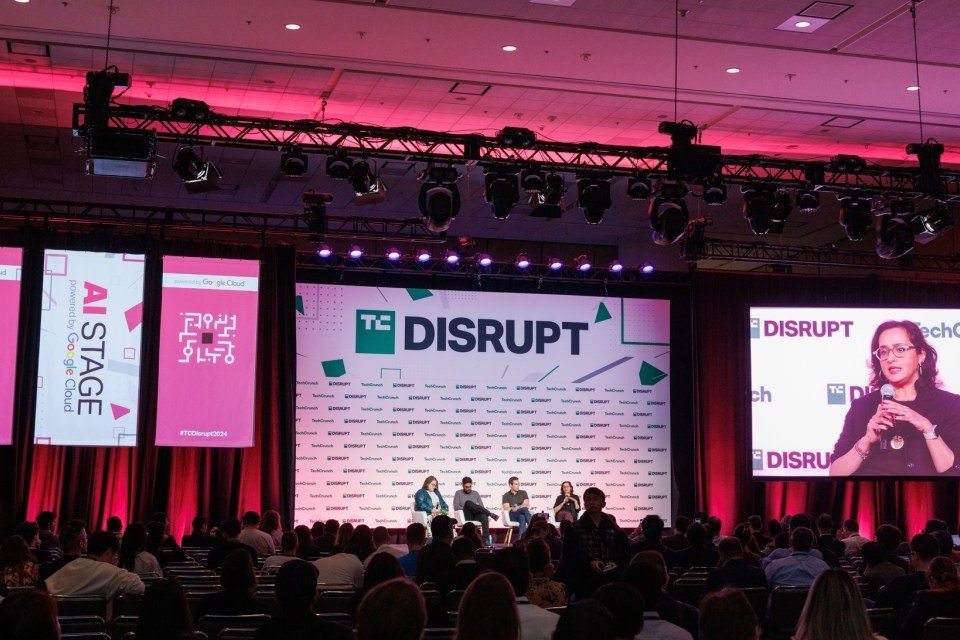
San Francisco As artificial intelligence transitions from demonstration models to critical business applications, autonomous vehicles, and real-world robotics, the industry confronts a significant challenge: building trust. TechCrunch Disrupt 2026, scheduled for October 13-15 at Moscone West in San Francisco, will dedicate five key sessions across its AI Stage and Real World AI Stage to addressing the fundamental issues of AI safety and security, which are increasingly becoming core product components.
The shift demands that AI founders not only innovate but also prioritize rigorous security protocols and robust safety frameworks. The discussions aim to provide insights into how companies can develop AI systems that enterprises and the public will genuinely trust and use, directly impacting market adoption and investment flows within the sector.
Why Enterprise AI Deployments Stall: The Anthropic View
Enterprise adoption of AI is proving uneven. Some companies report measurable value from AI deployments, while others remain mired in pilot programs, even 18 months post-initial engagement. Cat de Jong, Anthropic’s Head of Applied AI, will present firsthand observations in a session titled What Anthropic Sees When Enterprises Actually Deploy Claude. Her insights, drawn from direct work with companies integrating Claude into critical workflows, will illuminate the factors separating successful, value-generating deployments from those that remain stuck in experimental phases. For AI founders aiming to penetrate the enterprise market, understanding these distinctions is crucial for converting proofs-of-concept into sustained revenue streams.
The Agent Security Challenge: Beyond Application Permissions
The proliferation of autonomous AI agents introduces a new layer of security complexity. Questions surrounding agent access permissions, operational boundaries, and the inadequacy of traditional application-level security models are now front and center. In the session, The Agent Security Problem Nobody Is Talking About, Ric Smith, President of Products and Technology at Okta, and Gavriel Cohen, co-founder and CEO of NanoCo, will dissect agent security at the infrastructure level. They plan to detail architectural considerations founders must address to mitigate vulnerabilities when deploying agentic AI, emphasizing that agent security must be a foundational element, not an afterthought, on any product roadmap.
Securing AI in the Cloud: A New Enterprise Mandate
Achieving enterprise adoption for AI products extends far beyond an impressive demonstration. Security, governance, and observability are now mandatory discussion points when organizations consider integrating AI into their critical systems. Rudy Mitra, AWS VP of Security Services; Katie Moussouris, CEO of Luta Security; and cybersecurity veteran Wendy Nather will explore Securing the AI Enterprise: Why the Cloud Just Got a Lot More Complicated. Their discussion will focus on the essential infrastructure enterprises require as AI systems assume more autonomous roles, offering founders a direct understanding of the stringent security requirements that often differentiate innovation from successful deployment.
High-Stakes AI: Safety in Autonomous Systems
AI operating in the physical world carries heightened risks, where errors can have immediate, tangible consequences for vehicles, aircraft, and industrial systems. The Real World AI Stage will feature Nathan Michael, Shield AI Chief Technology Officer; Mikell Taylor, General Motors Director of Robotics Strategy; and Raquel Urtasun, Waabi founder and CEO, in a session called Building AI Systems When Failure Is Not an Option. These leaders from defense and autonomous systems will address the challenging question of determining when an autonomous system is sufficiently safe for deployment. The discussion will cover cultivating a safety culture, rigorous AI testing and validation, navigating complex regulatory landscapes, and building companies capable of earning trust when physical outcomes are at stake.
Robotics’ Data Dilemma: Paving the Way for a ‘ChatGPT Moment’
Robotics faces a critical data scarcity issue, lacking the vast training datasets that propelled advancements in large language models and self-driving vehicles. This data gap presents a significant obstacle to scaling physical AI. Les Karpas, Nvidia’s Inception Global Head of Physical AI, will explore this challenge in Robots Are Waiting for Their ChatGPT Moment. Here Is What Is Standing in the Way. He will discuss how advancements in data pipelines, sophisticated simulation environments, and foundation models could bridge this gap. The session aims to provide insights into what is required to develop, test, and deploy more capable and reliable robots, ultimately working towards robotics achieving its own transformative breakthrough and widespread real-world adoption.
Analyst Perspective & Market Impact
The intense focus on AI safety and security at TechCrunch Disrupt highlights a maturing market where technological prowess alone is insufficient for commercial success. For investors, this translates into a heightened emphasis on due diligence regarding an AI company’s governance frameworks, risk mitigation strategies, and compliance readiness. Companies demonstrating robust approaches to agent security, data privacy, and verifiable physical-world safety are likely to command a premium in valuation and secure larger enterprise contracts. Conversely, firms underestimating these challenges risk significant reputational damage, regulatory penalties from bodies like the SEC or Bank of England, and ultimately, exclusion from a potentially trillion-dollar market if trust cannot be established. The ability to articulate and implement credible safety and security protocols directly influences market adoption rates and, consequently, revenue growth potential.
| Key Challenges for AI Deployment | Industry Responses & Focus Areas at Disrupt |
|---|---|
| Enterprise AI pilots failing to scale or deliver measurable value | Anthropic’s insights on successful enterprise deployment strategies, moving beyond experimentation. |
| Novel security risks posed by autonomous AI agents with elevated permissions | Okta & NanoCo tackling infrastructure-level agent security and architectural decisions. |
| Increased complexity of cloud security, governance, and observability for enterprise AI | AWS, Luta Security, and Wendy Nather discussing essential AI infrastructure security. |
| Assessing and ensuring safety for AI systems operating in the physical world (vehicles, robots) | Shield AI, GM, and Waabi addressing safety culture, testing, and regulatory hurdles for autonomy. |
| Lack of massive training data hindering robotics’ advancement compared to LLMs | Nvidia exploring data pipelines, simulation, and foundation models to accelerate physical AI. |
The Big Question: Can the AI industry sufficiently address safety, security, and trust concerns to unlock the technology’s full economic potential and secure widespread adoption across diverse sectors, or will these critical hurdles temper market growth expectations?
Leave a Reply