
Key Takeaways
- Hello Robot’s Stretch 4, an assistive robot designed for daily tasks, launched in May and saw its initial production run completely sold out by June.
- Aaron Edsinger, CEO of Hello Robot and former Google robotics director, will demonstrate Stretch 4 at TechCrunch Disrupt 2026 in October.
- The company’s focus on practical utility and accessibility for individuals with severe mobility impairments offers a distinct strategy compared to the broader robotics industry’s emphasis on humanoids.
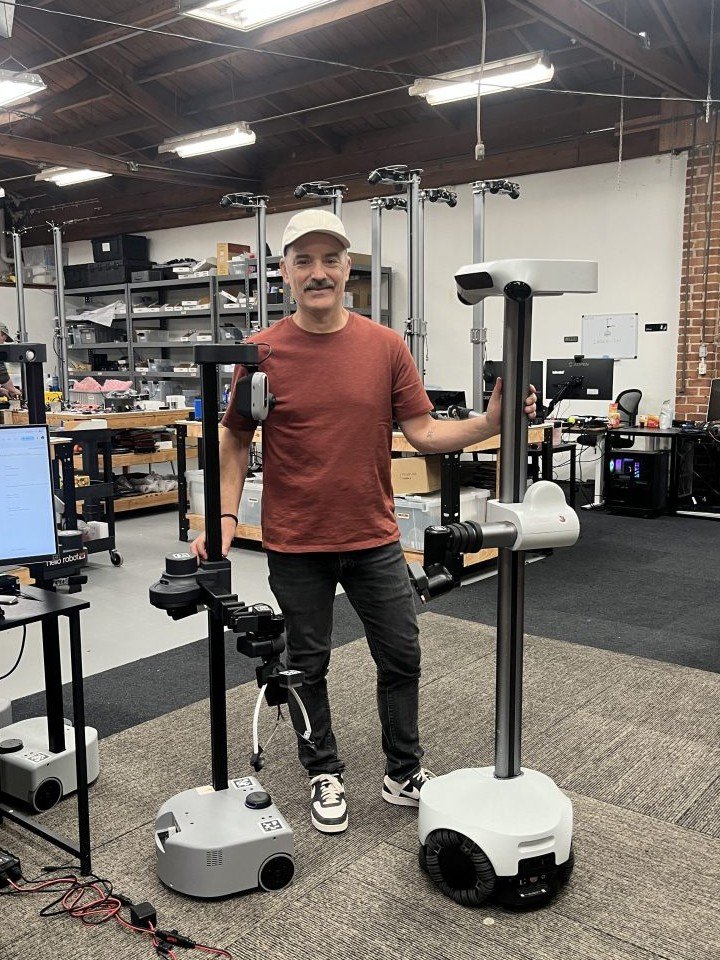
Hello Robot, a developer of assistive robotics, has achieved a rapid sell-out of the initial production run for its Stretch 4 home-assistance robot. Launched in May, the compact, wheeled robot, equipped with a telescoping arm, was designed to perform essential daily tasks for individuals with severe mobility impairments, with its first batch fully claimed by June.
Aaron Edsinger, CEO and co-founder of Hello Robot, is set to present Stretch 4 on the Real World AI Stage at TechCrunch Disrupt 2026, scheduled from October 1315 at Moscone West in San Francisco. This live demonstration aims to showcase the robot’s capabilities in real-life settings, emphasizing usefulness, safety, and accessibility as core design principles.
What Differentiates Stretch 4 in the Robotics Market?
While a significant portion of the robotics industry concentrates on developing complex humanoid robots, Hello Robot has pursued an alternative strategy with Stretch 4. The robot’s design prioritizes functionality within human-centric environments. It navigates using wheels, requires only a single arm for manipulation, and incorporates advanced sensors and contact sensitivity, allowing it to operate safely alongside people.
This design philosophy directly translates into tangible user benefits. Individuals with severe mobility impairments have reported using Stretch technology to perform tasks such as self-feeding, closing window blinds, scratching an itch, handling glasses, and even assisting with teeth brushing. These applications underscore a shift towards practical, assistive artificial intelligence rather than merely advanced locomotion or human-like aesthetics.
Who is Aaron Edsinger and What’s His Impact?
Aaron Edsinger brings extensive experience to Hello Robot. Before co-founding the company, he founded Meka Robotics and Redwood Robotics, both of which were acquired by Google in 2013. During his tenure as robotics director at Google, Edsinger guided business, product, and technical development for key robotics investments and contributed to Google’s broader robotics strategy.
His expertise spans the entire robot product design stack, from human-robot interaction and user experience to mechanical design, software architecture, and real-time control systems. This background informs Hello Robot’s objective: building robots that offer genuine utility and integrate seamlessly into people’s lives, rather than merely mimicking human form.
Analyst Perspective & Market Impact
The rapid sell-out of Hello Robot’s Stretch 4 production run provides a clear market signal: there is significant demand for robotics focused on practical, assistive applications. This initial commercial traction, combined with CEO Aaron Edsinger’s deep industry pedigree and track record of successful ventures, could attract considerable interest from venture capital and institutional investors monitoring the physical AI sector. The open-source software platform accompanying Stretch 4 also suggests a strategy to foster a developer ecosystem, potentially accelerating innovation and expanding market reach beyond direct sales.
How Does Hello Robot Compare to Broader Robotics Trends?
Hello Robot’s approach with Stretch 4 stands in contrast to the industry’s often-publicized advancements in humanoid robotics. The company’s strategy emphasizes specialized functionality and real-world problem-solving over general-purpose human emulation.
| Feature | Hello Robot (Stretch 4) | Broader Robotics (often Humanoids) |
|---|---|---|
| Primary Goal | Practical home assistance, utility | General purpose, human emulation, advanced locomotion |
| Form Factor | Compact, wheeled, telescoping arm | Bipedal, two-armed, human-like |
| Target User | Individuals with mobility impairments | Broad consumer/industrial, research |
| Market Traction (Initial) | First production run sold out | Varies, often demo-focused in early stages |
| Key Design Driver | Usefulness, safety, accessibility | Advanced capabilities, appearance, complex movement |
With Hello Robot demonstrating a strong market for utility-driven, assistive devices, the question for investors is whether specialized robotics applications will unlock higher commercial viability and faster adoption rates than the current push for general-purpose humanoid robots.
Leave a Reply