
🤖 FiniPot AI Insights
The 21Shares Ethereum ETF (TETH) experienced significant redemptions in the first half of 2026, leading to a substantial decrease in net assets. The high percentage of staked ETH (86.42%) at the end of June presents a potential liquidity risk for future redemptions, as staked ETH is subject to unbonding periods. This could lead to delays or an inability to meet redemption requests if a large number of investors seek to exit simultaneously. The declining NAV per share also reflects the decrease in ETH’s price during the period and realized losses on sold ETH. Broader market trends of outflows from Ethereum ETFs further contribute to the contextual risks.
Quick Summary
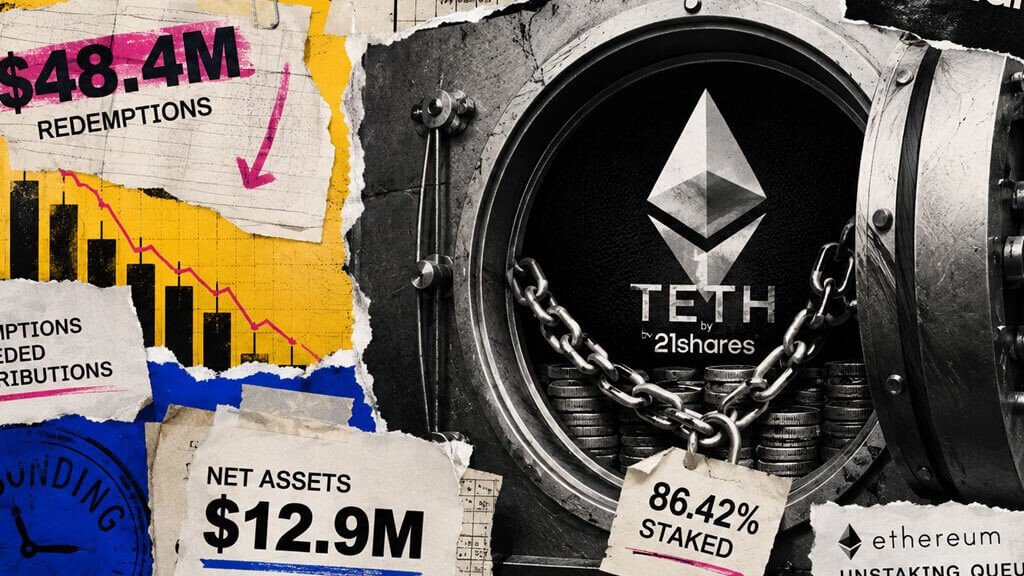
- The 21Shares Ethereum ETF (TETH) processed **$48.4 million** in redemptions during the first half of **2026**.
- Despite redemptions, **86.42%** of the ETF’s ETH holdings remained staked as of **June 30, 2026**.
- Net assets for the fund dropped significantly from **$31.3 million** to **$12.9 million**.
The 21Shares Ethereum ETF, known by its ticker TETH, experienced substantial outflows in the first six months of **2026**. The fund processed **$48.4 million** in redemptions, according to a filing made on **Aug. 14**. Even with these significant redemptions, a striking **86.42%** of the ETF’s Ethereum holdings were still staked by the end of **June**. This ratio highlights how Ethereum’s unstaking process could impact future redemption capabilities.
For the period ending **June 30, 2026**, TETH saw **$48.426 million** distributed to shareholders redeeming their shares. This was met by **$42.174 million** in contributions from new share purchases. This imbalance means redemptions outpaced new investments by **$6.251 million**. The trust sold over **21,000 ETH** to facilitate these cash redemptions. Notably, the filing reported no issues with failed, delayed, or suspended orders.
The fund’s financial position reflected these redemptions. Net assets shrunk from **$31.298 million** at the end of **2025** to **$12.917 million** by **June 30, 2026**. This decline was driven by fewer shares outstanding, a **46.89%** drop in Ethereum’s reference price, and a realized loss of **$12.769 million** from ETH sold to meet redemption requests. The net asset value per share also fell from **$14.83** to **$7.88**.
As of **June 30, 2026**, the trust held approximately **8,185 ETH**. Based on the **86.42%** staking ratio, this means roughly **7,074 ETH** were staked and **1,112 ETH** were in the process of unstaking. This staking ratio is considerably higher than the fund’s average staking exposure during the reporting period, which stood at **31.64%** for the second quarter and **27.32%** for the six-month span.
Are My Shares Safe if I Want to Redeem?
While the filing shows no failed redemptions in the first half of **2026**, the trust acknowledges that staked ETH is subject to variable unbonding periods. This lock-up can restrict the fund’s ability to meet redemption requests quickly if a surge in demand occurs. Investors typically trade TETH shares on exchanges, while authorized participants deal directly with the trust in larger blocks.
The composition of TETH’s holdings presents a timing challenge for future redemptions. Staked ETH cannot be moved or traded during its unbonding period. This means temporary lockups could limit the fund’s capacity to fulfill redemption orders. Authorized participants are the only ones who can place direct orders with the trust. Ordinary investors buy and sell TETH shares on public exchanges.
These outflows at TETH occur against a backdrop of broader volatility in the spot Ethereum ETF market. In **June 2026**, reports indicated that Ethereum ETFs experienced four consecutive weeks of withdrawals, totaling over **$870 million**. An inflow day of **$19.3 million** briefly interrupted a 17-day stretch of outflows.
A fresh wave of redemptions for TETH would put its available ETH outside of staking to the test. The speed at which additional ETH could be released from staking would become critical. The **86.42%** staking ratio at the end of the quarter signals a concentrated exposure to this timing constraint, as documented in the filing.
Leave a Reply