
🤖 FiniPot AI Insights
The European micro EV market is experiencing a surge in demand, driven by urbanization and environmental concerns. However, it is a highly competitive landscape with established global players and emerging Chinese manufacturers. Liux’s success will depend on its ability to differentiate through its sustainability claims and novel materials, while also proving the practicality and affordability of its offering. Securing sufficient funding for scaling production and establishing a robust distribution network will be crucial. Furthermore, navigating evolving battery technology and regulatory standards for EVs will be ongoing challenges.
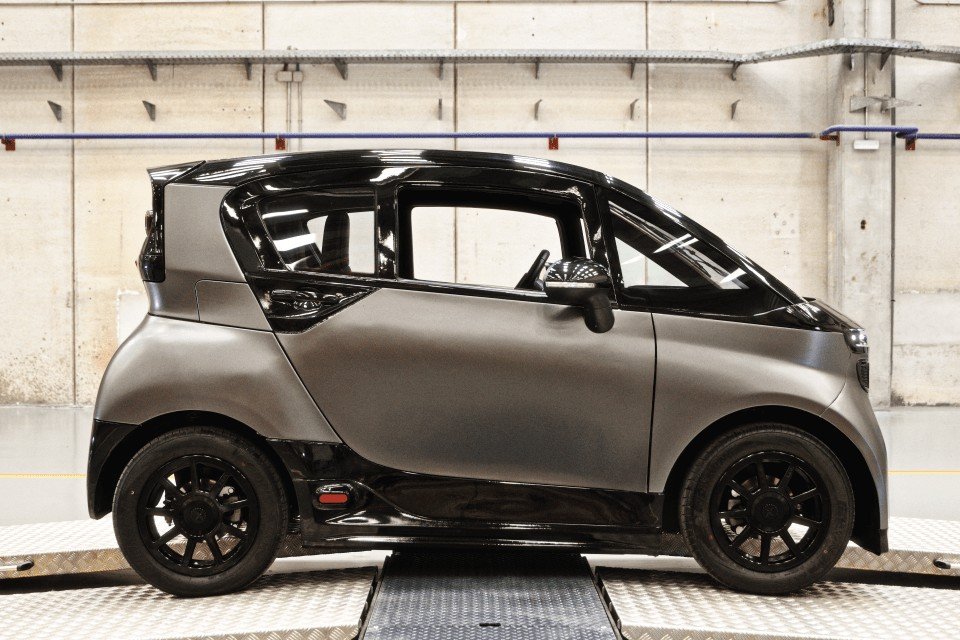
Spanish startup Liux is aiming to challenge the growing dominance of Chinese electric microcars in European cities with its upcoming Liux Big model, placing a unique emphasis on sustainability and material innovation. The company is entering a market that has seen iconic brands like Smart shift production to China and Swiss competitor Microlino gain traction.
Liux co-founder Antonio Espinosa de los Monteros, despite leading a firm with its production based in Spain, articulated a surprisingly contrarian view on European automotive identity. “The idea of a European car does not exist,” Monteros told TechCrunch, suggesting a shift in focus away from traditional national branding towards global manufacturing realities and sustainable practices.
While Liux has established Spain’s first new car plant in over three decades, the company acknowledges the difficulty of achieving a fully sovereign supply chain. Its strategy hinges on integrating sustainability as a core principle, with batteries designed for easy replacement and a focus on reducing product obsolescence. A key differentiator for the Liux Big is its fiber body, constructed from a novel linen-based biocomposite engineered for extraction and recycling.
“Recycling isnt just a lab concept,” Monteros emphasized. “What makes something recyclable has to do with how its built.” He previously co-founded Auara, a certified B Corp, underscoring a commitment to circular economy principles. His partner, David Sancho, brings expertise in electric vehicle engineering, including prior work on the hybrid supercar Breas.
Initially, Liux developed a five-seater prototype called the Animal, constructed predominantly from recycled and plant-based materials. However, the founders pivoted to a smaller vehicle, the Liux Big, believing it would improve their chances of securing European-wide homologation, which they have achieved for a 2026 launch. The company has grown to 65 employees and is preparing to scale production across three Spanish facilities.
The Azuqueca factory, near Madrid, operates on lean manufacturing principles, focusing on the final assembly stages. Liux projects a production capacity of up to 20,000 vehicles annually by 2030. The company has garnered over 7,500 pre-registrations for the Liux Big, suggesting potential demand, with the typical prospect identified as a 55- to 60-year-old urban dweller likely to use the microcar as a second vehicle.
Liux is exploring partnerships for business-to-business fleet management and potential autonomous driving integration. The Liux Big is slated to be priced below 18,000 (approximately $21,000) before subsidies, positioning it at the higher end of the microcar segment but with aspirations to offer superior value. The company has worked to maximize its L7e homologation classification, aiming to deliver a driving experience that rivals larger vehicles and prioritizing safety, even conducting maneuverability tests beyond regulatory requirements.
The initial model will feature 15 kWh and 20 kWh battery options, with a cargo variant planned. Liux has secured 16 million (about $18.5 million) in funding to bring the Liux Big to market through European dealership networks. The company’s showroom design also reflects its sustainable ethos, incorporating textile screens and linoleum flooring as subtle nods to its material choices, aiming to differentiate itself from international competitors.
Leave a Reply