
Key Takeaways
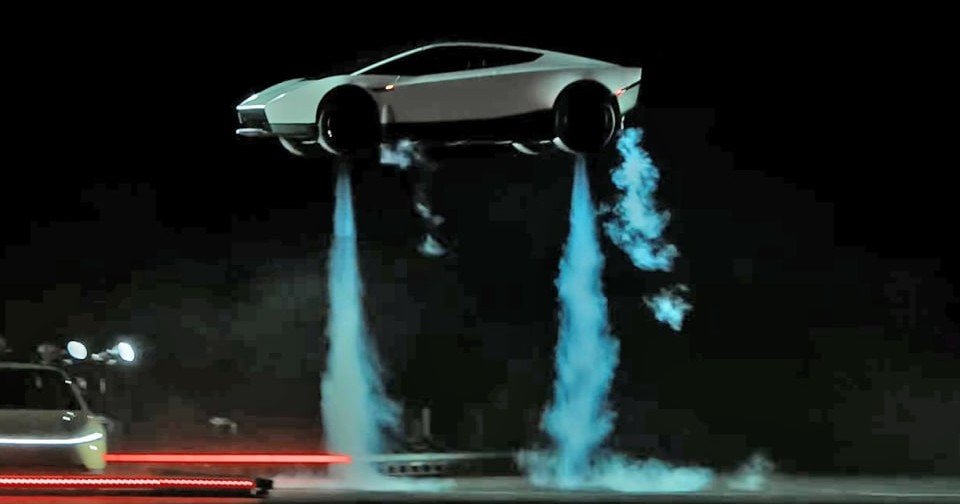
- Tesla unveiled a prototype of its long-delayed Roadster on Thursday, October 15, 2026, demonstrating brief airborne capabilities using cold-gas thrusters.
- Production for the vehicle, initially promised for 2020, is now slated to begin in 2028, with deposits ranging from $50,000 to $250,000.
- The “Rocket” version, capable of aerial acrobatics, will be invite-only and is explicitly not approved for public roads, raising significant regulatory questions.
Tesla, led by CEO Elon Musk, publicly demonstrated a prototype of its second-generation Roadster on Thursday, October 15, 2026, at a SpaceX testing facility in Texas. The high-profile event showcased the vehicle’s ability to briefly launch itself into the air using rocket-inspired cold-gas thrusters. This debut comes eight years after the Roadster was first announced and significantly later than its initial 2020 production target, with Musk now stating manufacturing will not commence until 2028.
What Did Elon Musk “Show Off” at the Roadster Event?
During the demonstration, the Tesla Roadster, a collaboration with SpaceX, performed two distinct airborne maneuvers. It first accelerated up a curved ramp, launching over five other Tesla vehicles before making a soft landing with cold-gas thrusters. Subsequently, it jumped 27 feet into the air, executing a barrel roll before another gentle descent. Musk acknowledged the prototype was “not necessarily a safety optimized car” and quipped that its fan-based suction system “really sucks” while creating downforce.
Roadster’s Performance and Production Timeline: A Decade in the Making
The Roadster prototype recorded an impressive 0-60 mph acceleration time of 0.81 seconds, significantly faster than the discontinued Model S Plaid. Musk aims for the production model to achieve a top speed of approximately 383 mph, roughly halfway to the speed of sound. However, the projected range has been scaled back, with the vehicle expected to travel 300 miles on a single charge, less than half of Musk’s original 2017 promise. The prolonged eight-year delay since its announcement and the further two-year wait until projected production in 2028 draw scrutiny to Tesla’s product timelines and capital allocation.
The Three Tiers of Roadster: Costs and Capabilities
Tesla plans to offer three versions of the new Roadster, each with varying capabilities and corresponding reservation costs. The base “Performance” model is described as “road-ready,” featuring a suction system but no thrusters, requiring an initial deposit of $50,000. The “Thrust” version, adding rear-mounted thrusters for enhanced acceleration, demands a $250,000 deposit. The most advanced, “air-ready” “Rocket” version, which incorporates perimeter cold-gas thrusters for the full aerial acrobatics shown, will be invite-only, seats one person, and is explicitly stated by Tesla as not approved for public roads.
Regulatory Hurdles: Can a Flying Car Stay on the Ground?
The introduction of a vehicle capable of aerial maneuvers immediately raises substantial questions regarding regulatory compliance and public road legality. Elon Musk himself conceded that the Roadster might not be permissible in all jurisdictions. Tesla’s clear disclaimer that the “Rocket” version is not approved for public roads highlights the significant legislative and safety frameworks that would need to evolve for such technology to become widely usable beyond private testing facilities. These regulatory challenges could limit the market for the most advanced, and expensive, versions of the car.
Analyst Perspective & Market Impact
From an investor standpoint, the Roadster’s demonstration serves as a powerful marketing spectacle, reinforcing Tesla’s brand as an innovator. However, the financial implications are more nuanced. Deposits of up to $250,000 for a vehicle not entering production for at least two more years represent interest-free capital for Tesla, yet the long lead time also means prolonged R&D expenditure without immediate revenue generation from sales. The regulatory ambiguities surrounding the “Rocket” version could significantly constrain its addressable market, potentially limiting its economic impact to an exclusive, non-road-legal niche rather than a mass-market offering. For the broader automotive market, this pushes boundaries, but for Tesla’s balance sheet, it’s a long-term R&D play with uncertain commercialization for its most ambitious features.
| Strength | Weakness |
|---|---|
| – Unparalleled brand innovation & public spectacle. | – Protracted delays (2017 announcement, 2028 production). |
| – Advanced engineering (cold-gas thrusters, suction system). | – Significant capital tie-up via deposits for years. |
| – High-performance metrics (0.81s 0-60mph). | – Reduced range (300 miles vs. original promise). |
| Opportunity | Threat |
| – Attract high-net-worth buyers & expand brand prestige. | – Regulatory hurdles & public road legality issues. |
| – Potential for technology spillover into other products. | – High R&D costs with limited commercial scale for “Rocket”. |
| – Further solidify “future tech” narrative for investors. | – Safety concerns & liability for airborne vehicles. |
The core question for investors and consumers alike remains whether the Tesla Roadster’s demonstrable, albeit limited, flight capability signals a genuine shift in personal transportation or primarily serves as a high-octane engineering showcase, particularly given its regulatory constraints and distant production timeline.
Leave a Reply