
Key Takeaways
- U.S. economic growth is accelerating, primarily driven by extensive investments in artificial intelligence infrastructure.
- Leading AI firms, including Anthropic and Meta Platforms, plan to raise up to $200 billion to expand their AI capabilities.
- This capital expenditure stimulates demand across various sectors, from advanced semiconductor manufacturing to heavy construction materials for data centers.
The U.S. economy demonstrates clear signs of accelerating activity, primarily driven by a significant surge in artificial intelligence investments. This extensive capital allocation is actively stimulating various industrial sectors, from advanced technology hardware to heavy construction. MarketWatch reported on October 27, 2026, that leading AI firms, including Anthropic and Facebook parent Meta Platforms, plan to raise as much as $200 billion to expand their AI capabilities. This fresh capital supplements hundreds of billions of dollars already deployed by U.S. corporations into their AI strategies, generating substantial demand for components ranging from advanced semiconductors and electrical equipment to steel and concrete necessary for new data centers.
The US Economy is Stronger Than Perceived
Despite pervasive public sentiment that the U.S. economy faces imminent collapse or significant trouble, hard data suggests a different trajectory. Rather than contracting, economic activity is expanding, largely due to a concentrated investment cycle within the technology sector. This investment has a ripple effect, translating directly into orders for durable goods, increased manufacturing output, and significant construction projects. The current environment contrasts sharply with recessionary fears often discussed in broader consumer sentiment surveys, highlighting a disconnect between market action and public perception.
AI Investment: The Engine Behind Economic Expansion
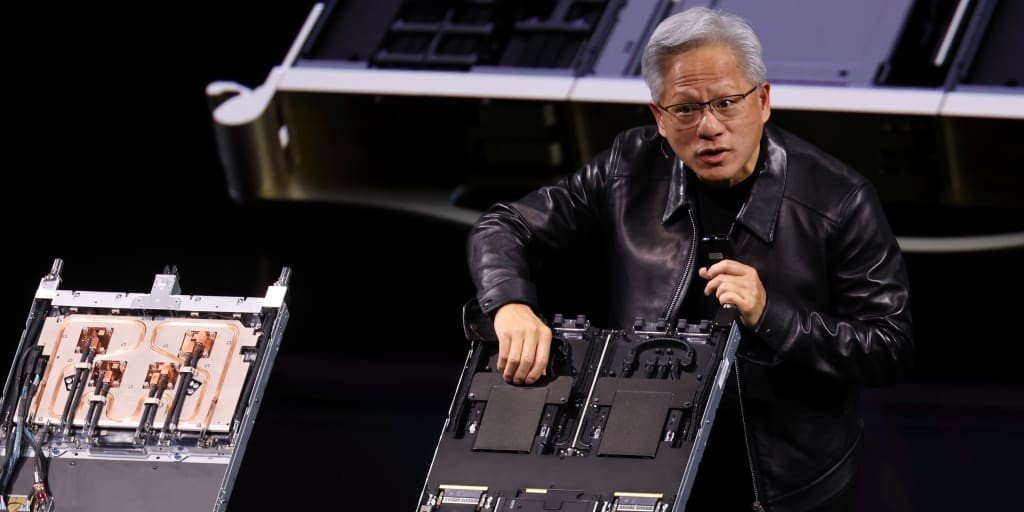
The sheer scale of capital being channeled into artificial intelligence is a primary driver of current economic strength. Nvidia CEO Jensen Huang, speaking at the Berlin GPU Technology Conference on October 21, highlighted the growing demand for specialized hardware. Companies are acquiring massive amounts of chips, high-performance computers, and complex electrical equipment. This extends to power turbines to support energy-intensive data centers, along with foundational construction materials such as steel, concrete, advanced plastics, and rare-earth metals required for these large-scale facilities. These purchases are not abstract financial movements; they represent concrete demand translated into industrial activity and job creation.
Who Profits From the AI Hardware Race?
While the immediate beneficiaries appear to be AI developers like Anthropic and Meta, the economic impact is far broader. Manufacturers of advanced semiconductors, power generation and distribution companies, and heavy industry suppliers are experiencing significant order increases. Construction firms specializing in large-scale infrastructure projects are also seeing substantial business. This demand creates a robust environment for capital goods producers, indicating that the economic benefits are distributed across a wider industrial base than just software and cloud services, offering revenue opportunities for diverse sectors from industrials to basic materials.
Analyst Perspective & Market Impact
Analysts observe that the concentration of capital towards AI infrastructure provides a robust, albeit focused, tailwind for GDP. While headlines often focus on the tech giants, the financial mechanism is far broader. This spending directly translates into revenue streams for durable goods manufacturers, utilities, and raw material suppliers. The question for investors is whether this demand is sustainable long-term or if it represents a short-cycle boom that could lead to overcapacity later. The sheer scale of capital expenditure from entities like Anthropic and Meta, aiming for $200 billion, suggests conviction, but also highlights a winner-take-all dynamic that could impact broader market liquidity.
| Driving Forces (Growth Catalysts) | Potential Headwinds (Market Concerns) |
|---|---|
| Massive Corporate AI Investment: Up to $200B planned, hundreds of billions already spent. | Concentration Risk: Growth heavily dependent on a few tech behemoths. |
| Broad Sector Stimulus: Demand for chips, power, construction, rare-earth metals. | Inflationary Pressures: Increased demand for materials and energy could push prices higher. |
| Innovation & Productivity Gains: Long-term benefits from AI integration. | Supply Chain Strain: Intense demand for specialized components like advanced chips. |
| New Infrastructure Development: Building of vast data centers creates jobs and capital expenditure. | Energy Consumption: Large data centers require significant power, raising sustainability and cost issues. |
Can the U.S. economy maintain this AI-driven momentum, or does its concentrated nature expose it to future risks from technological shifts or capital expenditure slowdowns?
Leave a Reply