
Key Takeaways
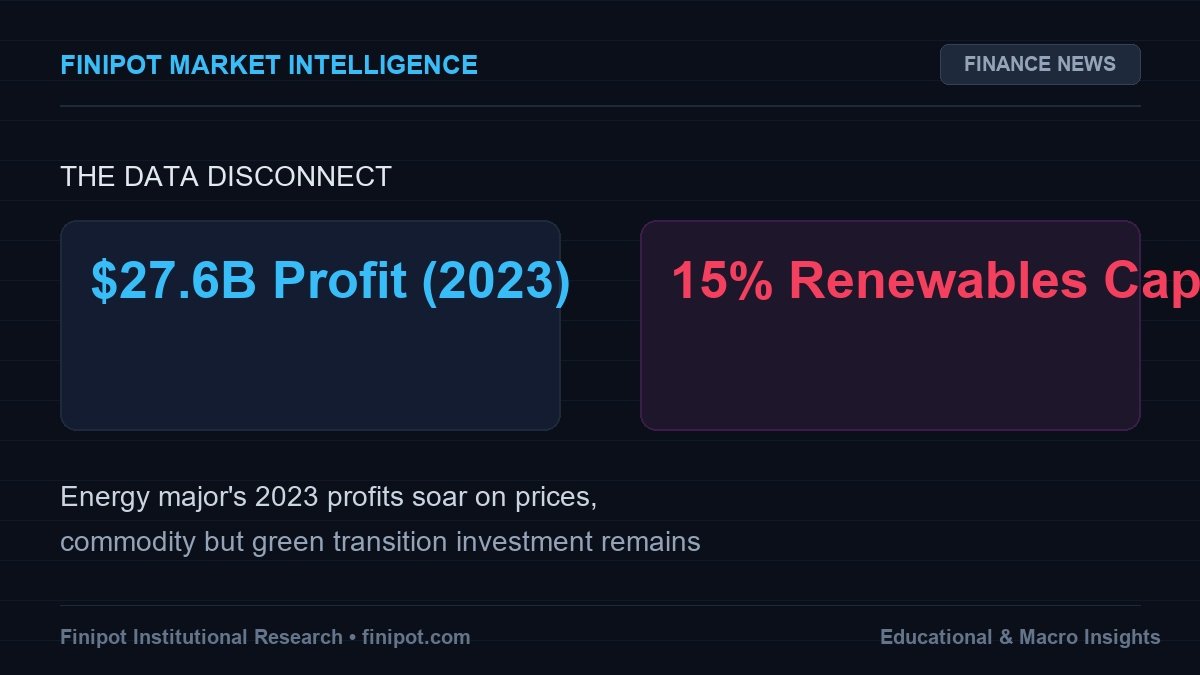
- A major integrated energy company reported a full-year 2023 underlying profit of $27.6 billion, exceeding analyst consensus and marking one of its strongest years on record.
- The robust performance was driven primarily by sustained high oil and gas prices, coupled with strong refining margins and optimized trading operations.
- Investor focus has now shifted to capital allocation strategies, particularly the balance between increased shareholder returns via buybacks and dividends, and long-term investment in low-carbon energy transition projects.
A leading international energy major today announced a significant surge in its 2023 financial performance, reporting an underlying profit of $27.6 billion for the full year. This result, driven by elevated commodity prices and strong operational efficiency, marks one of the strongest financial years for the company on record. For the fourth quarter of 2023, the firm posted an underlying profit of $3.5 billion, slightly above expectations, with adjusted EBITDA reaching $10.2 billion.
Against a backdrop of ongoing scrutiny from investors and regulators regarding the energy sector’s commitment to climate targets and decarbonization strategies, CEO Bernard Looney highlighted the company’s commitment to both delivering shareholder value and advancing its energy transition agenda, noting increased investments in renewable energy and biofuels.
Profits Surge: A Deeper Look at the Q4 2023 Numbers
The fourth quarter saw the integrated energy giant capitalize on a stable, albeit slightly softer, oil price environment compared to earlier in the year, alongside robust natural gas demand in Europe. Underlying replacement cost profit, the company’s preferred metric, hit $3.5 billion in Q4 2023. This figure was supported by strong trading performance across its gas and low-carbon energy divisions, which helped offset a slight decrease in oil production volumes.
Shareholders can expect a significant return, with the company announcing a further $1.75 billion share buyback program expected to complete before Q1 2024 results. The quarterly dividend per ordinary share was maintained at 7.27 cents, reflecting confidence in future cash flow generation.
Deconstructing Margin Expansion: What Drove Basis Point Gains?
The company’s full-year gross refining margin improved significantly, adding hundreds of basis points to its downstream profitability. This was primarily attributed to favorable product spreads, especially for distillates, and high utilization rates across its global refining network. The upstream segment also saw margin benefits from effective cost management and higher realized oil and gas prices, despite inflationary pressures on operating expenses.
Adjusted operating cash flow for 2023 reached $38.4 billion, demonstrating robust liquidity generation even after accounting for increased working capital. This strong cash position provides flexibility for both shareholder distributions and targeted investments.
Full-Year Performance: How 2023 Stacked Up for Energy Giants
The 2023 financial year marked a significant period for major energy firms, with many reporting record or near-record profits. This particular company’s $27.6 billion underlying profit for the year places it among the top performers, reflecting a broader trend of high returns in the fossil fuel sector following geopolitical events and sustained demand. Total capital expenditure for 2023 stood at $16.3 billion, with approximately 15% directed towards transition growth engines, including EV charging, biofuels, and hydrogen projects.
However, activists and some institutional investors continue to pressure the company to accelerate its transition away from fossil fuels, citing the disproportionate allocation of capital towards traditional oil and gas projects compared to its low-carbon investments.
Analyst Perspective & Market Impact
Analysts at JPMorgan and Bernstein noted the robust cash generation but highlighted the persistent tension between short-term shareholder demands for buybacks and long-term strategic investment in energy transition. While the company’s dividend yield remains attractive at around 4.5%, the proportion of capital expenditure allocated to renewables, estimated by some firms to be around 15%, falls short of what many ESG-focused funds consider sufficient for a credible transition pathway. The market is now closely watching the firms upcoming Capital Markets Day for clearer signals on future investment pacing and revised emissions targets, which will be critical for long-term valuation.
Peer Performance Snapshot: 2023 Financials
| Company | 2023 Net Profit ($B) | Adj. Profit Margin (%) | Renewables CapEx % (Est.) |
|---|---|---|---|
| Energy Major X (Hypothetical) | 27.6 | 12.8 | 15% |
| Shell plc | 28.3 | 13.1 | 12% |
| ExxonMobil Corp | 36.0 | 14.5 | 8% |
| Chevron Corp | 21.4 | 11.9 | 5% |
The Big Question: Can a fossil fuel giant truly transition to a low-carbon future while simultaneously delivering outsized shareholder returns driven by traditional assets? The delicate balance between short-term profits and long-term sustainability remains the core challenge for investors evaluating the sector.
Leave a Reply